Here are five items I believe would change the overall oral health of our Army:

1. Pit and Fissure Sealants. On all occlusal surfaces of every new recruit and every new LT in OBC. Regardless of caries risk. Caries is a carbohydrate modified bacterial infectious disease. Let’s eliminate it’s ability to live in our population.

2. Remove all partially erupted/malposed third molars indicated for removal – before soldiers leave basic training. I see more symptomatic third molars on sick call than any other dental issue. That isn’t surprising considering most of our patient population falls in the 18-25 year old range. We have an underutilized 4 month exodontia program. Let’s train dentists to do this and station them to run exodontia clinics at our major training installations.

3. Offer whitening to every soldier in uniform. It’s not expensive, it takes up almost no chair time, and there is some (limited) evidence that it can have an effect on decreasing the bacterial load in the oral cavity. Soldiers are more likely to take care of something they are proud of and think is cool. My biggest disease cases are soldiers who have just given up because they are embarrassed of their smile or who have never known what it is like to smile with confidence. Give them a smile they are proud of and they will want to take care of it.

4. Cleanings twice a year. Currently soldiers can have one dental prophylaxis per year unless they have periodontal disease. Although the “twice a year” cleaning schedule was essentially invented by insurance companies and is not really evidence based, it would increase patient encounters for our soldiers. This would create a potential for earlier diagnosis of caries and periodontal issues and shift dental care from treatment to prevention. We would definitely need more hygienists to handle this item.

5. Bring patient education into the 21st century. Come to any dental clinic and you might be lucky to find a handful of outdated trifold pamphlets on how to take care of your teeth, etc in the waiting room. No one reads them. Take a look around. All our soldiers are on their Blackberrys and iPhones. Let’s use facebook, twitter, and user friendly websites to get information to our young soldiers in a more effective manner. Education leads to prevention. Prevention leads to lower disease and non-battle injuries (DNBI) in the force.

Imagine what the dental readiness of our fighting force would look like in five years if these five items went into effect tomorrow?
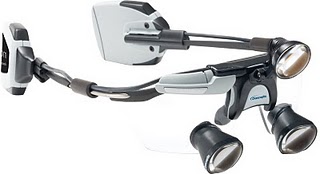

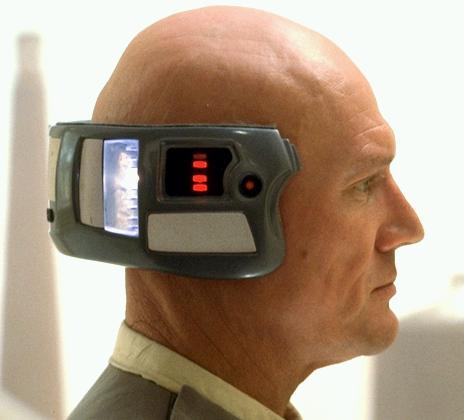
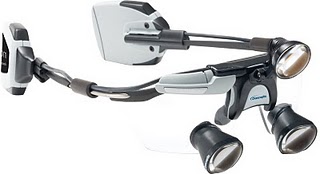
Orascoptic has a new light source for their through-the-lens loupes called Freedom. Apparently the hazards of a corded power source are too much to bear. Thankfully Orascoptic has the solution. Battery Pods on your head! Thats right!

Why would anyone want to wear these things? Don’t get me wrong, I am a huge believer in using illumination with your loupes. I just dont want to look like something from Star Wars! About a year and a half ago I got the Discovery light from Orascoptic. The DENTAC commander out here authorized the purchase of a light for each general dentist and most of the EFDAs. Really awesome decision. These lights are amazing. I forgot to charge the batteries this Monday and had to practice for the first time in a year without them. I couldnt see anything. It made me realize just how awesome and important good illumination is. So Im all about lights. But come on, what real benefit does this new light offer?  I will confess that I have caught my cord once or twice but it is by no means a daily occurrence.

Now the guy wearing them below looks all happy and carefree. Probably because those kayak paddles on his loupes are hidden in his mop of conveniently matching hair. But what if you dont have shaggy hair to hide your battery pods? You will probably wind up looking more like Lobot from Star wars than Richard Gere. Oh one other thing. Despite how flat you make batteries, they are still heavy. Apparently these are so heavy they have to have a counterweight on the nose. Sounds comfy.

A recent article on drbicuspid.com caught my eye.  “NHS to reward U.K. dentists for quality, not quantity, of care” talks about some of the quality control issues that are present when government programs are responsible for  the delivery of dental care. Sounds very very similar to the quality control issues I have seen with the ADDP program out here in Hawaii.

I have absolutely no idea how they plan to achieve this. If they are successful I think the Army needs to closely look at what systems were put in place to evaluate and control quality. How do we get someone to take a close look at the Army Dental Care System and really fine tune our programs?

The Amalgam debate…once again

Posted: December 16, 2010 in Uncategorized

CNN posted a pretty biased article on amalgam yesterday. Top story on CNN.com for a while actually.

Amalgam is safe. Its ugly as crap but it is safe and extremely effective. I use it in my practice but I also use a ton of composites. The two materials are different and both have their advantages. Does amalgam contain mercury? You bet. So do the fluorescent lights that you sit under every day. The biggest threat with the mercury in amalgam exists as the material is undergoing its reaction. The type of mercury in amalgam is only absorbed through the lungs, it is not absorbed through the gut. Since the mercury is absorbed through the lungs only during the reaction guess who is at risk – the dentist!

“But mercury is a dangerous element!” Yes it is. But so are Hydrogen and Oxygen. Get a match near either and watch out. But guess what happens when you take two of those Hydrogens and put them in the presence of one Oxygen. Water fool. Good old fashioned H2O. What do you think the public would do if they found out that water contains the dangerous elements Oxygen and Hydrogen!?! Thats right! We should classify water as a dangerous medical device as well. Or ban its use outright.

I place amalgams every day. That means that I huff elemental mercury vapor all day long. My mercury levels should be through the roof. Well I went and had them checked and guess what? They are far below the lowest level deemed harmful. So the patient with a mouth FULL of amalgams that are already set will see a small spike in their mercury levels (that bring them up to the level I live at) for a few hours after placement. Then they drop back down.

I love all the conspiracy stories though. Heres something to think about though. Composites are more expensive and most are not covered fully by insurance companies. That means they are hugely profitable in private practice. So why arent all the dentists out there saying “Oh yes, amalgam is dangerous. You NEED to have them replaced with composite?” Because it just isnt in the best interest of our patients, thats why. If the FDA puts a ban on amalgam then a lot of dentists are going to get rich replacing them.


4 day weekends rule

Posted: November 26, 2010 in Uncategorized

One of my favorite parts of the army are the 4 day weekends. I get atleast one a month but this month I have had three 4 day weekends! Veterans day, a Brigade Training Holiday, and Thanksgiving. The time off is just awesome, especially considering when my unit is in the field or when we are deployed I work 7 days a week.

Yesterday we celebrated Thanksgiving at our home in Hawaii. This is our second thanksgiving away from family since being out here. Our original plan called for several guests but due to a family situation a couple of our guests decided at the last minute not to come. Thankfully we did have the opportuntity to host the wife of a Citadel classmate of mine whose husband is currently deployed. It was sad for her to celebrate Thanksgiving without her  husband but she had her Citadel family to take care of her.

One of the biggest things I am thankful  for is my family. In that group I include my close friends and neighbors, my extended family, my army family, my Citadel family, and my immediate family. My “families” make everything I do that much more important.

Just when I tought my day was over

Posted: November 22, 2010 in Uncategorized
Tags:

I got a phone call from our new xo saying she had a soldier who was in exruciating pain -10 out of 10- and needed to be seen asap. Sick call is from 0715-0900. It was almost 1600. I just changed out of my scrubs and was ready to go home. Of course I agreed to see the guy. He showed up a few minutes later looking like he wasn’t in any pain at all. My assistants were scrambling to get a chair together so I could at least do some diagnosis on the guy before the clinic closed. I got him in and found he had a maxillary third molar with decay encroaching the pulp. Probably kinda painful. When I asked him how bad his pain was out of a scale of 10 with 10 being you just got your leg blown off. He replied “when you put it that way, sir, I guess its probably a 3…..kind a like a charlie horse in my mouth.”

I sent him to get a PANO but our machine was down. They’re painting in the x-ray room apparently. I managed to get an assistant to get a periapical shot of the tooth. Gave the guy his options, consented him, and had the tooth out in five minutes.

I went to go put in his prescriptions into the system. Motrin 800 (30 tabs) 1 tab tid; Roxicet 5/325 (twenty) 1-2 t q 4-6h prn extreme pain (maybe overkill in hindsight considering the ease of the procedure, but my usual rx for extractions). I submitted the Rx and double checked it to make sure it was in. I finished up with the patient and was out the door in five minutes.

The system we use to enter these scrips is called CHCS. It is a DOS based system from the early 1980s that links all the military treatment facilites to the pharmacies. This allows us to enter prescriptions under password protected access from any facility and have it just pop up in the local pharmacy. It is an antiquated system that reminds me of trying to play computer games on the PC my dad built in 1986. C:/new rx. etc.

I almost made it home when I get the phone call that the prescription had not been entered properly. I cursed my lack of old school computer knowledge and pulled the car over so I could call the pharmacy. It was 1701. They werent picking up. Irritated, I turned the car around. Drove all the way back to the clinic, re-entered the prescriptions, then walked the patient over to the pharmacy and waited with him until they filled it. When I cancelled the original order in the system to re-enter it, CHCS asked me for a cancellation comment:

“Sorry. My DOS skills aren’t what they used to be.”

Army lifestyle

Posted: November 22, 2010 in Uncategorized

This is probably one of the most difficult things for most newly commissioned officers to deal with. While you were in dental school no one cared what you wore, how long your hair was, if you shaved, whether or not you could run/do pushups/sit-ups, or where you went on your time off.

The army is not only interested in all of those things but they have an opinion as well. The army has regulations on what to wear and when. You have to cut your hair a certain way, no beards are allowed, and moustaches are frowned upon. You have to take and pass a physical fitness test (APFT) twice a year and depending on where you are stationed you probably will have to get up at 0500 to do PT with your unit at least once a week.

On top of all the regulation during your “duty day” the Army will regulate your personal time as well. You usually are not allowed to leave a certain mile radius of your assigned base without a “pass” and cannot visit certain “off limits” establishments in your community. Before you leave for a four day weekend, you will likely have to have your vehicle inspected by some representative from your unit.

Despite all of the personal intrusions the army lifestyle is not that bad. Once you get used to it you just move on. There are benefits to being told what to wear. I never have to think about what I’m going to wear to work. My hair is too short to have to deal with and my wife likes me clean shaven, though she misses the beard I sported for six years before I came on active duty.

I would add that being assigned to a TDA DENTAC is very different than being assigned to a Brigade Combat Team. The BCT treats it’s officers well because there aren’t nearly as many officers there as there are in a dental clinic. And being a Captain in a brigade unit is a lot bigger deal than being a Captain in a dental clinic. In the clinic the CPTs are the most junior officers.

Clinical Practice

Posted: November 22, 2010 in Uncategorized
The army is really great about allowing me to practice the way I want. Although I spend the majority of my time on Class 3 Operative (gross decay that makes soldiers non-deployable) I have every opportuntiy to practice full spectrum general dentistry. In my practice I perform operative and restorative dentistry, fixed prosthodontics, removable prosthodontics (very limited), perio surgery to include crown lengthening and gingival grafts, non surgical endodontics, oral surgery, and a good bit of preventive dentistry.
As for pedo and ortho – those two specialties dont get a lot of attention in the army. We only treat active duty soldiers, not dependents. As such our pediatric exposure is limited to after hours emergencies. Ortho is also very limited. Due to the deployments few soldiers are able to get orthodontic therapy. Soldiers are not supposed to depoloy with braces. I found pedo very stressful and ortho to be only moderately interesting. I enjoy our young adult patient population. And they are generally taking no medications and have no medical conditions.
I did a lot of great procedures in my residency like placing and restoring implants, surgical endodontics, porcelain veneers, etc. Due to my situation with the unit deploying I dont get to do a lot of that anymore. A big downside to all of this is that I dont get to see the same patients more than once. That is something I really long for. I want to be able to develop long term relationships with my patients and have people WANT to see me. I want people to know my name and want to be seen by me That doesnt exist in the army. Being the dentist for a brigade gives me a little bit of that, but even still this job is temporary.
No one tells me when to restore or what kind of restoration to place – be it composite, RMGI, or amalgam. I get to make that decision based on my clinical judgement. Unfortunately the patient rarely is told the risks, benefits, or complications of each restoration nor are they routinely allowed to choose what type of restoration they receive. Although I am a proponent of the use of amalgam, many patients do not like the way it looks. In my mind that is a valid concern. I think they should be given the information about the materials and, after listening to my professional opinion on what I think is best, be able to choose what they want placed in their bodies.
Money is another great benefit of the army. We have a huge budget and I get to order a lot of supplies. I found a new composite system I wanted so I bought it. I wanted new instruments. Got them too. New segmental matrix system? No problem. Unlike the civilian world in which a corporation is rewarded for being fiscally conservative, in the army if you dont spend all the money in your budget they assume you dont need it. Then your budget gets cut. Works out well for us!
Another great advantage over civilian practice is that there is no bottom line. Sure, they monitor my production but I dont have a quota or anything like that – nor am I paid based on production or collections. I feel no need to “sell” dentistry and I dont hesitate to tell someone that they dont need that filling or crown unless they truly need it. I get paid either way.

Promotions

Posted: November 22, 2010 in Uncategorized
The army is different from the civilian world in many ways. A big difference is that most civilian dentists are in solo practices while in the army we are one big corporate group practice. Like the corporate world, we get promoted. With promotions come more rank, pay, privileges, and occasionally respect. The army medical department differs from the rest of the army in that our promotion boards are kind of just a formality. Dentists can reasonably assume that they will get promoted every six years. You cant get promoted early but if you are a total screw up you may get promoted late. In the regular army promotions are competitive and officers who are awesome at their job can get promoted ahead of their peers. This is called “below the zone.” This disparity was recently discussed during the annual junior officer’s video teleconference with our corps chief. His answer was essentially this: Promotions to Major are pretty much set in stone. Promotions to LTC and COL have the potential to be competitive. Laws regarding this are set by congres, etc, etc.
Here is the problem. Hypothetical situation: Those junior officers who go above and beyond will never get promoted ahead of their peers for their hard work. Their initial obligation will come to an end and they will realize that there is no reason to work for an organization that does not reward their drive, talent, or ambition. The above average officers realize their talent is being limited and get out of the military. The below average officers see the opportunity created by the talent vacuum and decide to stick around. This problem snowballs and creates a situation where the talent and drive lies in the junior officer ranks. And no one is doing anything to retain the talent.
Of course this isnt the situation with everyone. I have a lot of respect for many of our senior officers. When I was in my AEGD one of our oral surgeons told me about the three types of army dentists: “those in-training, those in-payback, and those who are in-competent.” Thats a pretty big generalization but I can definitely see where he was coming from.
My concern is what this is doing to the Army Dental Corps in 20 or 30 years? Who will the leaders be? What direction will they be taking the organization in? What things can we do to encourage talented junior officers to stay? The big army is already realizing this problem and is trying to identify those officers with strategic mindsets and cultivate them as the next generation of army leaders. I hope our branch catches on.

To AEGD or not to AEGD…

Posted: November 21, 2010 in Uncategorized
Tags: ,

A big issue for me when I first came in was whether I wanted to apply for specialty training, apply for an AEGD, or to simply come on board with my original commitment and learn the ropes one day at a time.

I decided that I was not ready to pursue specialty training at the time and that I wanted to complete an AEGD. My goal was to do the AEGD and then get an assignment with a TO&E unit.

The AEGD was tough. It was not at all what I thought it was going to be. I thought about quitting on several occasions.

It wasn’t until I finished the program and got to my follow on assignment that I realized the value of that training. I was working with other general dentists – some who completed an AEGD and some who didn’t. The difference was unbelievable. Despite my issues with my AEGD, I appreciate the high standards it instilled in me both as an officer and a clinician.

Dental school teaches you a little about everything and a lot about nothing. Like they say,” a little knowledge is dangerous.”. The AEGD really honed the clinical decision making skills that were planted in me in dental school and made me really good at general dentistry. It also gave me a couple skills that most general dentists don’t have. In particular the surgical removal of 3rd molars. I spent six weeks in oral surgery during my time there doing nothing but 3rds. On top of that, the program director had us continue to take out thirds in our clinic the whole year. I also got credentialed in oral conscious sedation.

So as hesitant as I was to do the AEGD I cant imagine not doing one now. The lifelong impact that it has on my career as a dentist is priceless. It was definitely worth the extra year in the army.

The only caveat to these great programs is that by completing them you are more likely to wind up in a TO&E unit.  That’s not to say that by NOT doing an AEGD you won’t get assigned to a field unit or that by doing an AEGD you are guaranteed to get one. But let’s just say that in my class of eight residents, only three of us wanted to go to field units and all eight of us went to TO&E slots.

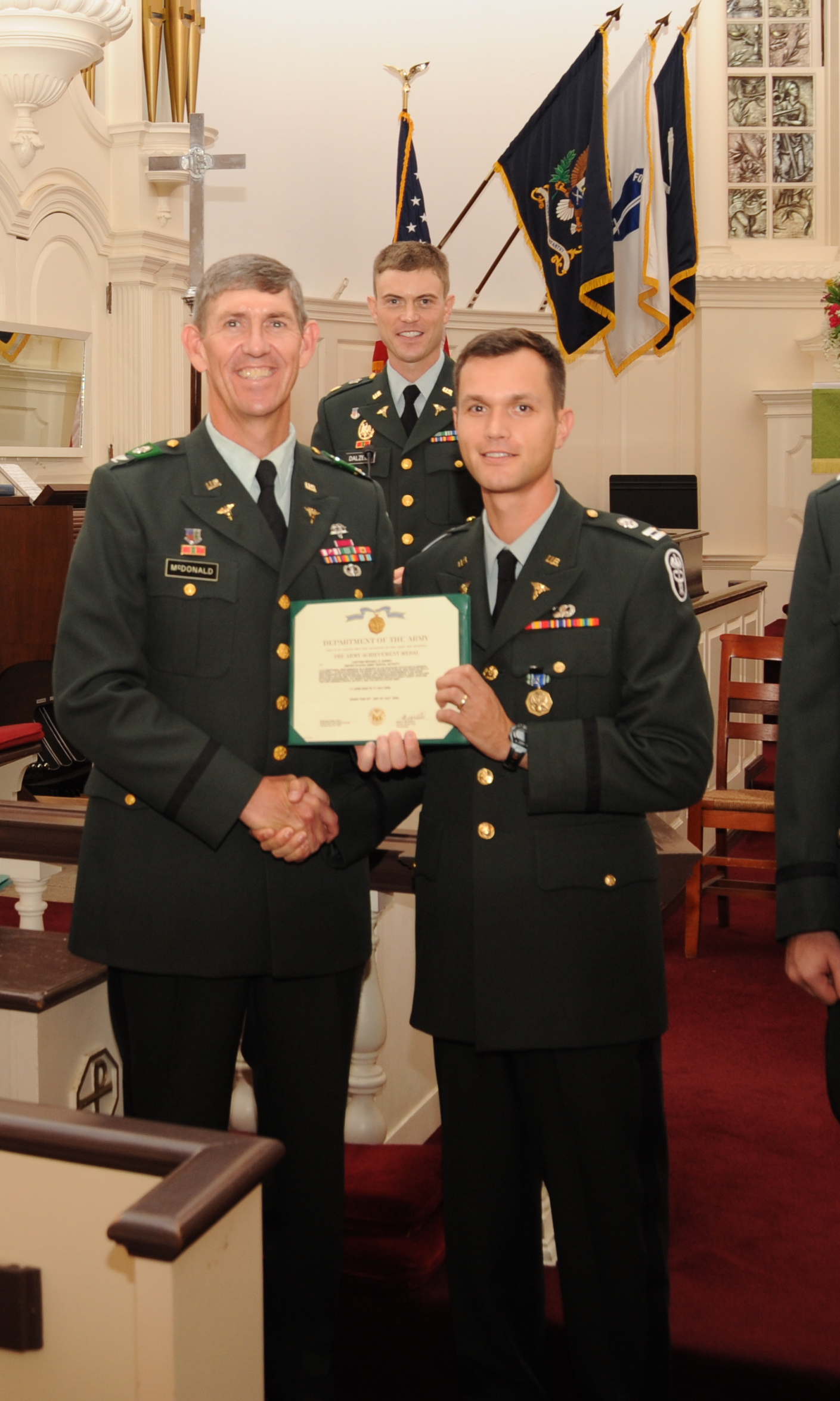
AEGD Graduation to TO&E unit!